
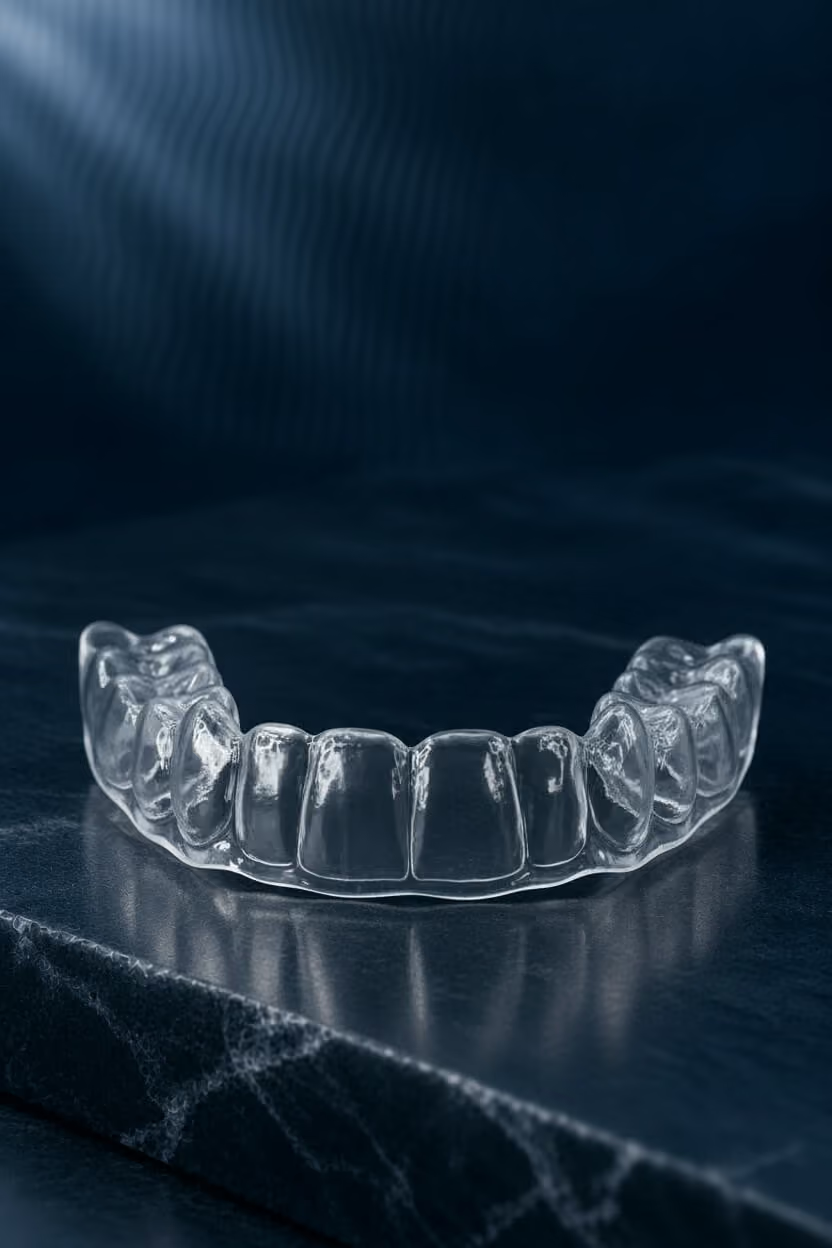
Custom-fabricated retainers designed to provide dependable fit and support post-orthodontic retention.
Get Started
3–5 Days
Available
Available — confirm requirements
Viva Dental Lab provides custom retainers for dental and orthodontic practices requiring patient-specific appliances following orthodontic treatment. Retainers are fabricated from the patient's current dental records to support the prescribed retention protocol.
Accurate records are important for achieving a properly fitting retainer. Practices can submit conventional impressions or compatible digital scans depending on the selected workflow.
Retention appliances need to reproduce the patient's intended tooth position accurately while maintaining a comfortable and stable fit. Viva Dental Lab focuses on accurate fabrication, careful finishing, and quality inspection before each appliance is delivered.
Retainer material and fabrication specifications depend on the selected appliance. Confirm available retainer configurations and material requirements with the laboratory.
Compatible digital scans can be incorporated into the retainer workflow. Digital records should accurately capture the patient's current dentition and required treatment area.
Retainers are inspected for adaptation, fabrication quality, trimming, finishing, and conformity with the submitted prescription before delivery.
Identify the change in tooth position when submitting the case rather than assuming the laboratory should reproduce the previous retainer. If the current tooth position requires clinical evaluation or orthodontic correction, address that before requesting fabrication of a replacement retention appliance.
Confirm that the scan contains complete, usable anatomy for the arch being treated and does not contain significant missing or distorted areas. If the scan no longer represents the tooth position that should be maintained, a new scan or impression may be necessary.
An existing retainer can be useful as a reference, but a current impression or digital scan should be provided for fabrication when possible. If the patient's tooth position or dental anatomy has changed, the existing retainer may no longer represent the desired final position.
Provide them when required by the selected workflow or when the laboratory needs them to establish the intended occlusal relationship. Complete records can help the laboratory confirm the appliance design before fabrication.
Clearly identify the appliance being requested, the arch or arches involved, and any case-specific fabrication instructions. If there are existing restorations, orthodontic appliances, missing teeth, or other conditions that affect the design, include that information with the prescription.
Yes. Digital scans can be used to fabricate custom retainers. The scan should accurately capture the current tooth positions and the anatomy required for fabrication, and the prescription should clearly identify the requested appliance and arch.
Provide a completed laboratory prescription and an accurate impression or compatible digital scan of the arch being retained. Include the opposing arch and bite record when required for the selected retainer workflow, along with any relevant clinical instructions.