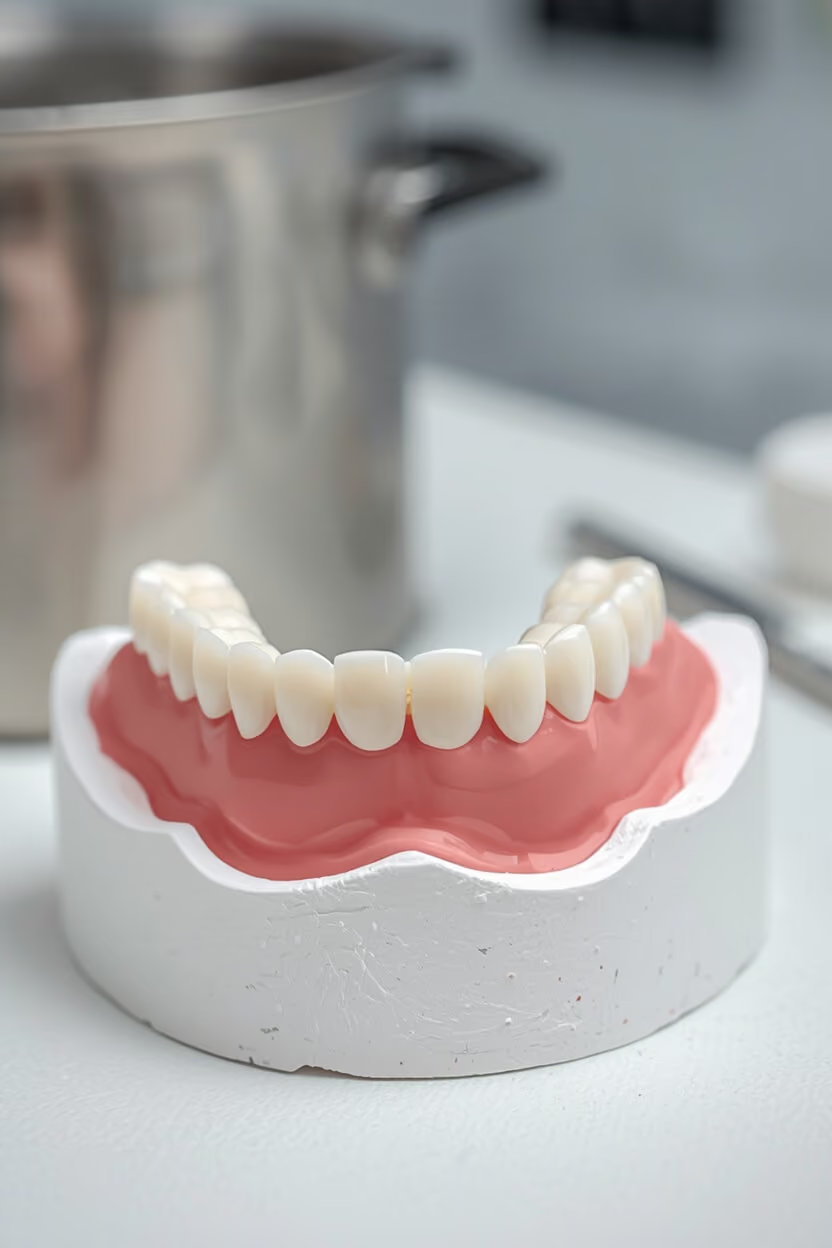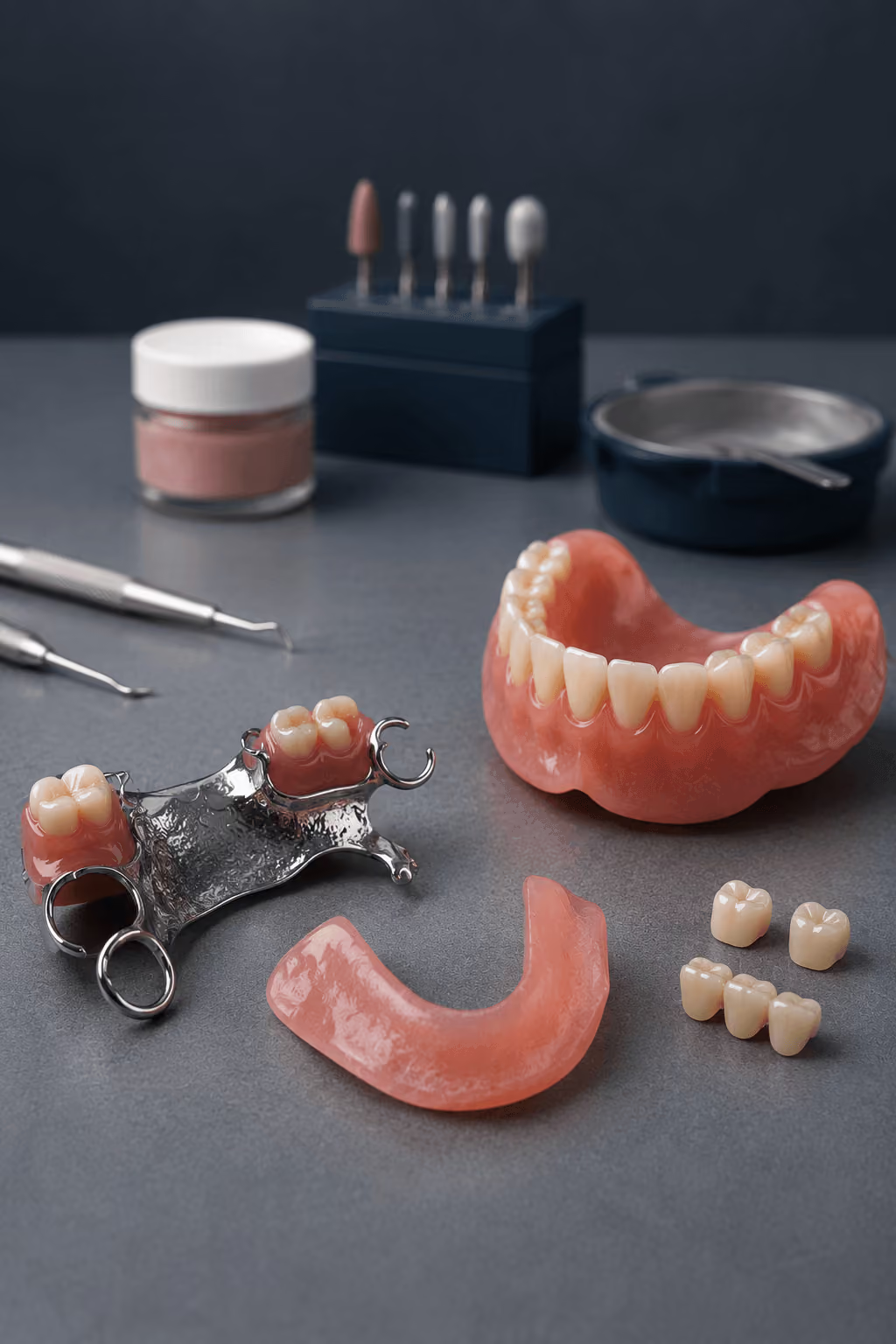
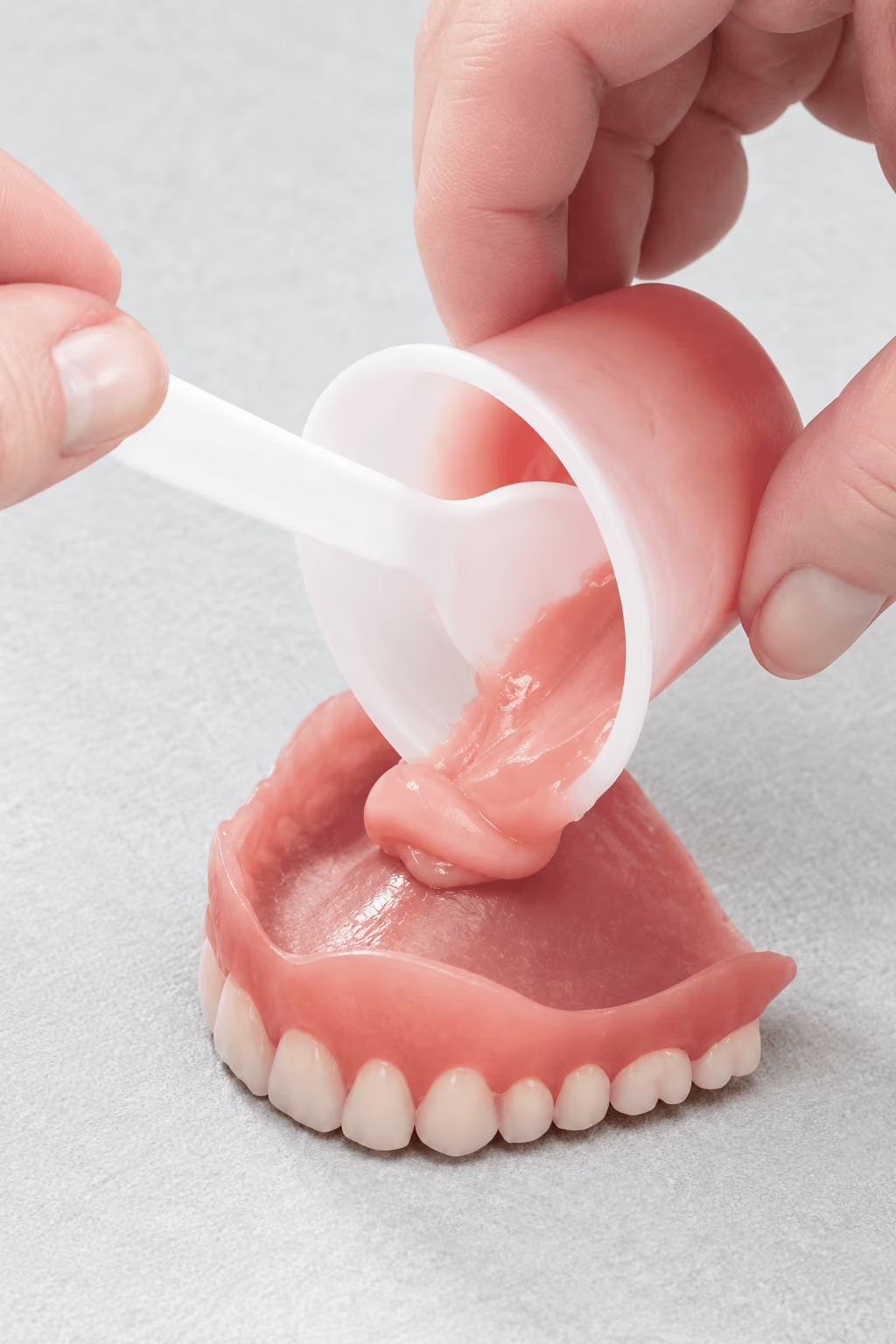
Professional rebasing services to replace the entire denture base while keeping existing teeth, restoring fit, function, and hygiene.
Get Started
3-5 business days
N/A (Receive existing denture)
STL files (if new tissue scan needed)
Rebasing replaces the entire denture base with new acrylic while keeping the existing teeth. This is ideal when the acrylic base is heavily stained, fractured, or poorly fitting, but the teeth are still in good condition. It extends the prosthesis life at a fraction of the cost of a remake.
We use premium, high-impact, cross-linked acrylic for all rebases. This ensures the new base is highly resistant to staining, odor, and fracture. Our technicians carefully preserve the exact tooth position and occlusion during the flasking process.
Rebasing is primarily an analog process requiring the physical denture. However, if the tissue has changed significantly, we can take a new digital scan (STL) of the tissue and use it to design the new base thickness digitally before processing.
The rebased denture is checked on the master cast for even tissue adaptation. We verify that the tooth position has not shifted during processing and that the new acrylic margins are smooth and highly polished.
Clearly document the requested occlusal or jaw-relation changes on the laboratory prescription. Because rebasing is intended to retain the existing tooth arrangement, significant changes to the occlusal relationship may indicate that a different treatment approach is needed.
A rebase retains the existing denture teeth and their arrangement while replacing the denture base. If the existing teeth, occlusion, jaw relationship, or overall prosthesis are no longer suitable, fabrication of a new denture may be more appropriate.
A repair addresses localized damage to an existing appliance, such as a fracture or broken component. A rebase is a more extensive procedure in which the denture base material is replaced while retaining the existing tooth arrangement when clinically appropriate.
A removable partial denture can require rebasing, but suitability depends on the existing framework, denture base, ridge changes, border extension, occlusion, and framework relationship. These factors should be evaluated before selecting a rebase procedure.
Submit the existing denture with the laboratory prescription and the records required to establish the intended tissue relationship and occlusion. Include clear instructions identifying the rebase request and any case-specific requirements. Proper authorization and records are important because rebasing requires the existing tooth arrangement to be maintained during fabrication.
Evaluate whether the existing tooth arrangement, occlusal relationship, denture fit, and overall prosthesis remain suitable for retention of the existing teeth. If the existing occlusion or jaw relationship requires significant correction, a new denture may be more appropriate than a rebase.
A rebase may be appropriate when the existing denture's teeth and overall arrangement remain suitable, but a more extensive replacement of the denture base is needed. A reline modifies the tissue-facing surface, while a rebase replaces the denture base material more extensively.
A repair is intended to address localized damage to an existing appliance. If the denture has significant deterioration, repeated fractures, extensive base problems, or broader changes that cannot be appropriately addressed through a localized repair, a rebase or new prosthesis may be more appropriate. The existing appliance and clinical requirements should be evaluated before selecting the treatment approach.